
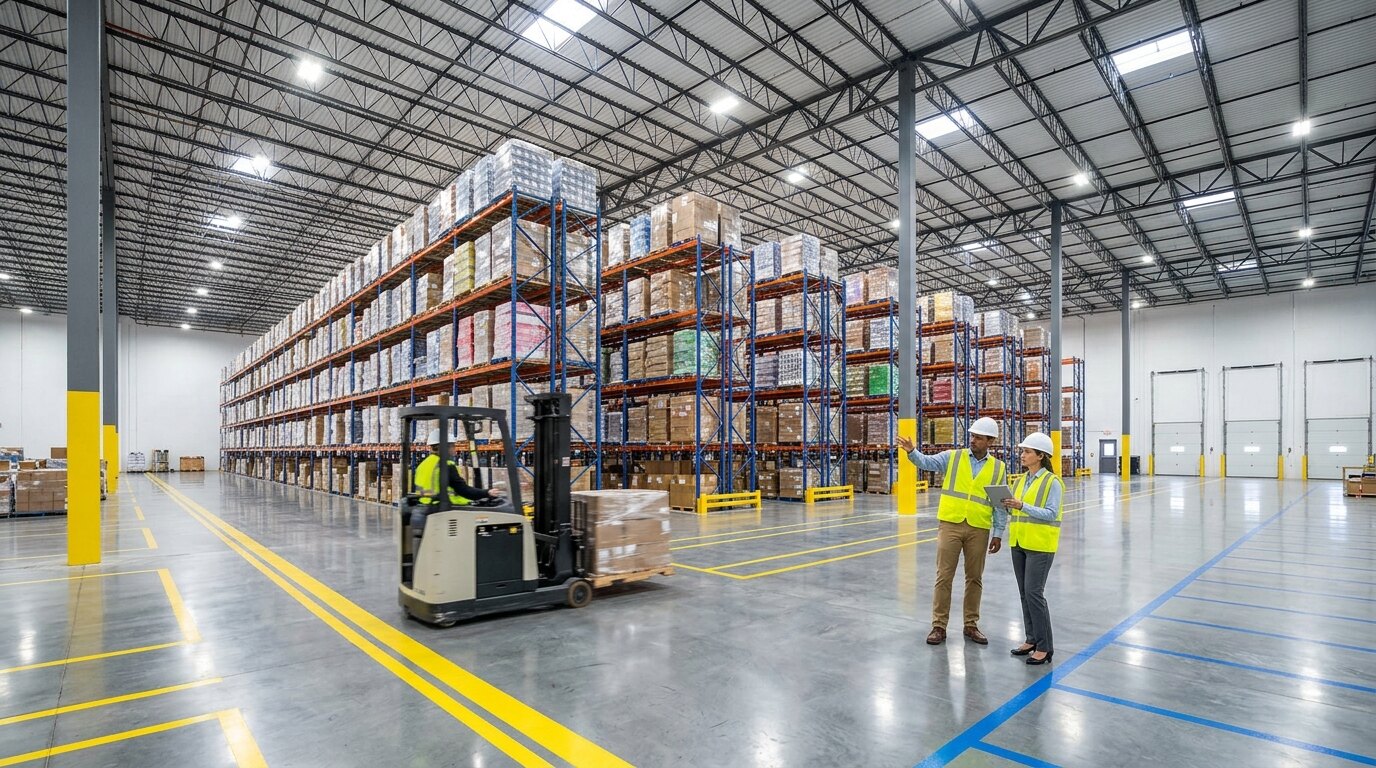
"I want to invest in industrial in Querétaro." We hear it often, and it's almost always followed by a pause. Because "industrial" isn't an asset; it's a family of assets that behave very differently. A 2,000 m² warehouse leased to a distributor, a 15,000 m² build-to-suit plant for an auto parts maker and ten hectares of land waiting for development have almost nothing in common except the word.
This guide is meant to help you decide which of the three makes sense for you. It doesn't start with the market. It starts with your answers.
First, five questions about you
1. Do you need cash flow from month one?
If yes, land is almost off the table. A leased warehouse or building is the path.
2. How long can you wait?
Land can take years to turn into income. A speculative building, months to find a tenant. A leased building, none.
3. How involved do you want to be?
Land demands permits, feasibility letters, security and, if you develop, managing construction. A building on a long-term lease demands far less.
4. Will you or your company use the property?
If you're the user, it's a different decision: you're buying operating capacity, not yield.
5. What ticket size do you handle?
Large buildings in top-tier parks require capital only some investors or funds have. Small warehouses and mid-size lots open the door to other profiles.
With those answers in mind, let's look at the three paths.
Path A. Small and mid-size warehouses
What they are. Spaces from a few hundred to a few thousand meters, often outside large-scale parks, used by distributors, retailers, workshops, service companies and regional e-commerce.
For. Accessible ticket, many possible tenants, manageable turnover. Demand comes from local businesses, not only multinationals, which spreads the risk.
Against. Tenants with weaker credit, shorter leases and more management. Specs vary widely: height, floor, docks, offices. A poorly specified warehouse becomes hard to lease.
Who it's for. Individual or wealth-preservation investors seeking steady income without stepping up to large-building tickets.
Path B. Industrial buildings in parks
What they are. Class A buildings in parks with full infrastructure, almost always leased to domestic or foreign companies on medium- to long-term leases, often in dollars.
For. Corporate tenants, long leases, maintenance borne by the tenant in many structures and relative liquidity, since funds and developers buy this kind of asset.
Against. High tickets and dependence on one tenant per building. If it leaves, re-leasing can take time. And market context matters: according to Solili, national industrial vacancy rose to 5.5% at the end of the third quarter of 2026, while new construction in Querétaro has fallen roughly 76% from its 2023 peak. The market no longer absorbs any generic building at any price.
Who it's for. Institutional investors, family offices or groups that can handle the ticket and prefer tenant risk to development risk.
Path C. Industrial land
What it is. Lots with or without industrial zoning, inside or outside parks, that can be sold to a developer, developed or held in reserve.
For. The asset with the most appreciation potential when location and feasibility are right. In a market where developers mainly build to suit, ready land is the scarce raw material.
Against. No income while it waits. It demands intense technical diligence: zoning, power, water, access, title. In Querétaro, the toughest filter today is getting power: two similar lots can have opposite fates depending on the load they can secure.
Who it's for. Developers, long-horizon investors with patient capital, and users planning to build their own plant.
The three paths side by side
| Small/mid warehouse | Building in a park | Industrial land | |
|---|---|---|---|
| Immediate income | Yes, if leased | Yes, if leased | No |
| Ticket | Low to medium | High | Variable |
| Management | Medium | Low | High |
| Main risk | Tenant quality | Tenant leaving | Feasibility and time |
| Appreciation potential | Moderate | Moderate | High if chosen well |
| Liquidity | Medium | Medium to high | Low to medium |
Three profiles, three decisions
To ground the theory, three made-up but very common cases.
Mariana, wealth-preservation investor. She has capital from a recent sale and wants monthly income that doesn't depend on tourists or residential tenants. She doesn't want to deal with construction. For her, one or two well-specified mid-size warehouses, leased to companies with a track record in areas with solid urban demand, make more sense than a lot that wouldn't pay her anything for years.
Grupo Arce, auto parts company. It already leases a building in a park, but its lease ends in two years and production is going to grow. Its question isn't about yield but control. Buying land with zoning and power feasibility and building to suit gives it long-term certainty. For them, the right lot is worth more than any available building.
A regional developer. Knows the market and has relationships with users looking for space. Its business is buying land, securing feasibility and building with signed leases. For it, the absolute priority is prepared land in corridors where its clients want to be.
A fourth option people forget: the hybrid asset
Between the warehouse and the retail unit sit hybrid formats: showrooms with storage, small buildings with a commercial front, offices with a warehouse. In parts of Querétaro where city and industry meet, such as along the main roads in El Marqués or Corregidora, these spaces attract distribution, equipment, construction and technical service companies. They can be an interesting entry point for anyone who wants industrial exposure without the large-building ticket.
What the return looks like on each path
Without promising numbers, it helps to understand where the money comes from in each case. In a leased warehouse or building, the return comes from net rent: what the tenant pays minus property tax, insurance, owner-paid maintenance and vacant periods. As a market reference, Solili puts Querétaro's industrial asking rents around 6 dollars per square meter per month, among the most competitive in the country.
With land, the return comes from the gap between purchase price and sale or development value, minus the costs of waiting and preparing the lot: feasibility letters, studies, roads, security. It isn't collected month by month but at the end, and it depends heavily on buying well at the start.
That's why the two paths attract different profiles. One favors consistency; the other, potential.
Mistakes we see often
- Buying land expecting income. If you need cash flow, land will frustrate you.
- Buying a speculative building without studying demand. In a market with more availability than two years ago, the tenant isn't guaranteed.
- Ignoring specs. Clear height, floor load, number of docks and electrical load decide who can use a warehouse.
- Comparing price per meter only. A cheaper building in a low-demand corridor can cost more than a pricier one in the right place.
- Not looking next door. Sometimes the same asset in San Luis Potosí or Guanajuato offers a better price-to-demand ratio for your case.
Frequently asked questions
Can I buy a building and lease it to a foreign company?
Yes, it's one of the most common models. The tenant will usually require clear specs, certifications and often a location inside a recognized park. Leases are typically in dollars and run several years.
Does buying land outside a park save money?
It can, if you have the experience to solve on your own what the park already solved: zoning, power, access and roads. If not, the upfront savings usually vanish in time and works.
What warehouse size leases fastest?
It depends on the area, but in general small and mid-size spaces, well specified and close to the city, have a wider pool of tenants than very large buildings.
Before you decide
If you're still unsure after reading this, go back to the first question: do you need cash flow from month one? Most decisions sort themselves out from that answer. The rest, location, ticket, specs, gets solved with analysis.
This content is for informational purposes only and does not constitute legal, tax, financial or investment advice. Examples are illustrative and market figures come from public reports available as of November 2026. Before buying commercial property, land or investment property in Mexico, we recommend validating documentation, zoning, permits, restrictions, project feasibility and legal conditions with qualified professionals.
The images shown are for reference purposes only and may not represent reality.