
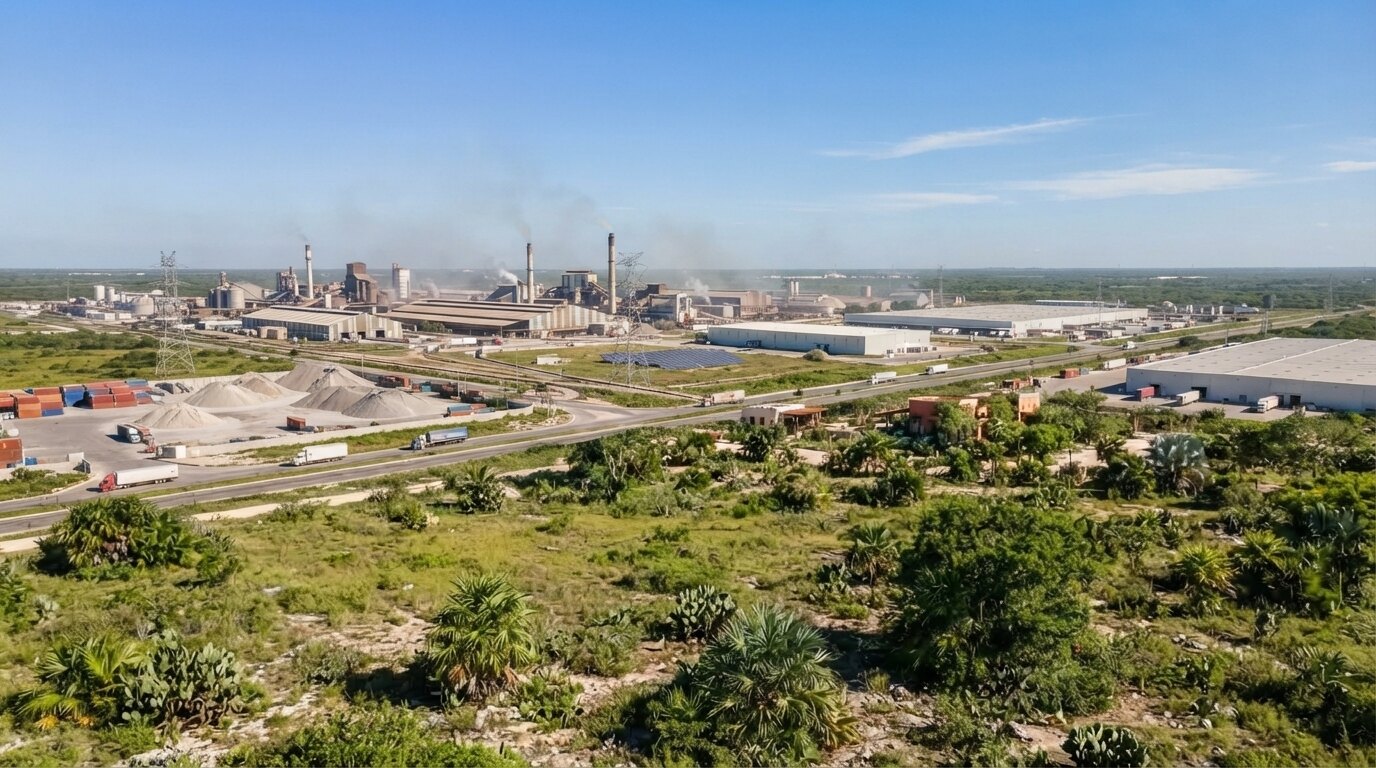
Yucatán is no longer only a quality-of-life story. For commercial real estate investors, the state is becoming a logistics, industrial and port-connected market that deserves a more precise read. The important shift is not one isolated project. It is the combination of Mérida’s metropolitan growth, the Kanasín industrial corridor, the Mérida-Teya rail environment, Progreso’s port modernization and a stronger public narrative around Yucatán as a platform for trade in the southeast.
That mix changes how investors should evaluate land. A parcel that once looked like an ordinary industrial lot may now sit inside a wider logistics thesis. A site near Kanasín may matter not only because it is close to Mérida, but because it connects with road access, industrial use, future freight movement and a growing need for warehouse, distribution and service infrastructure.
For buyers, the best starting point is the actual inventory. Selva Comercial’s Yucatán property hub already includes industrial, office and land opportunities across the state. The Kanasín section is especially relevant because it concentrates industrial land for logistics and warehouse uses, including listings such as a logistics warehouse lot in Kanasín and an industrial lot for warehouses.
Why Kanasín deserves attention
Kanasín sits in the kind of location that can become more meaningful as logistics infrastructure matures. It is close enough to Mérida to serve the metropolitan market, but industrial enough to support uses that would not necessarily belong inside the most premium residential corridors. For investors, that creates a practical category: land that can serve warehousing, distribution, light industrial activity, storage, service providers and commercial operations tied to the growth of the city.
The individual listing details matter here. A land site for a logistics warehouse belongs in a different conversation than a storefront or a residential lot. Buyers need to ask whether the dimensions, access, allowed uses and surrounding infrastructure match the operational needs of a future tenant or operator. The same applies to a warehouse-oriented industrial lot. Its value is not only in the land size; it is in whether the site can actually support the kind of business activity the buyer is underwriting.
The port factor changes the map
Progreso’s modernization matters because ports do not only affect port land. They affect inland logistics, warehouse demand, distribution planning and the way companies think about regional supply chains. When a port becomes more competitive, industrial land in the surrounding metropolitan economy can gain a stronger role. That does not mean every lot in Yucatán automatically becomes strategic, but it does mean buyers should study the relationship between port access, road connections, freight movement and future commercial demand.
For commercial buyers, this is where the Yucatán thesis becomes interesting. The state is not competing only on tourism or residential growth. It is increasingly positioned around infrastructure, manufacturing, trade and services. That can support several types of real estate: industrial lots, storage facilities, small warehouses, logistics yards, service centers, commercial land near growth corridors and mixed-use land in areas where housing, employment and mobility overlap.
Industrial land is not bought like scenic land
Investors coming from tourism or residential markets sometimes look at industrial land with the wrong filters. They ask whether the land feels attractive, when the better question is whether it works. Is access practical for trucks and employees? Are surrounding roads adequate? What utilities are available or planned? What kind of businesses already operate nearby? Is the land better for ownership, development, build-to-suit, long-term hold or immediate operation?
Yucatán’s industrial opportunity rewards that kind of discipline. The market can be attractive, but only when the buyer connects the asset to a use case. A smaller Kanasín parcel may be more useful for a specific operator than a much larger site with weaker access. A site inside a planned industrial environment may reduce friction for certain uses.
Where mixed-use land enters the story
Industrial growth rarely stays isolated. As logistics, employment and population expand, demand also forms around services: food, convenience retail, clinics, offices, light commercial space, repair services, staff housing nearby, parking and other everyday business needs. This is where Yucatán’s commercial inventory becomes broader than industrial land alone.
Selva Comercial’s Yucatán land section includes a range of commercial and development opportunities, including a mixed-use lot near Costco and Galerías Mérida. That type of asset belongs to another layer of the market: not pure logistics, not pure office, but land that sits in a consolidated commercial and residential context.
Questions to ask before buying in this corridor
A smart acquisition process should start with use. What is the most realistic commercial or industrial use for the property? What is the fallback use if the first plan changes? How dependent is the thesis on future infrastructure? What kind of operator would need this exact location? How long can the investor hold the asset if absorption takes longer than expected?
Then come the physical and legal questions: land use, access, services, frontage, buildability, environmental restrictions, road quality, surrounding activity and documentation. None of this is glamorous, but it is exactly the work that separates a serious industrial investment from a pretty story with a warehouse label taped on top.
Yucatán’s logistics moment is still selective
The most important point is not that every industrial lot in Yucatán is suddenly a winner. The point is that the state’s infrastructure story gives investors a stronger reason to study the market with discipline. Kanasín, Progreso and Mérida’s commercial corridors are becoming part of a more connected investment map. Buyers who understand that map can compare assets more intelligently and avoid treating all land as if it served the same purpose.
If your strategy involves logistics, warehousing, service businesses, industrial land or long-term commercial positioning, Yucatán deserves a careful look. Start with Selva Comercial’s Yucatán listings, then compare the Kanasín industrial inventory with broader land opportunities across the state.
Explore industrial and commercial land in Yucatán with Selva Comercial.
Our team can help you compare Kanasín logistics land, Mérida mixed-use sites and broader commercial opportunities across the state.
The images shown are for reference purposes only and may not represent reality.