
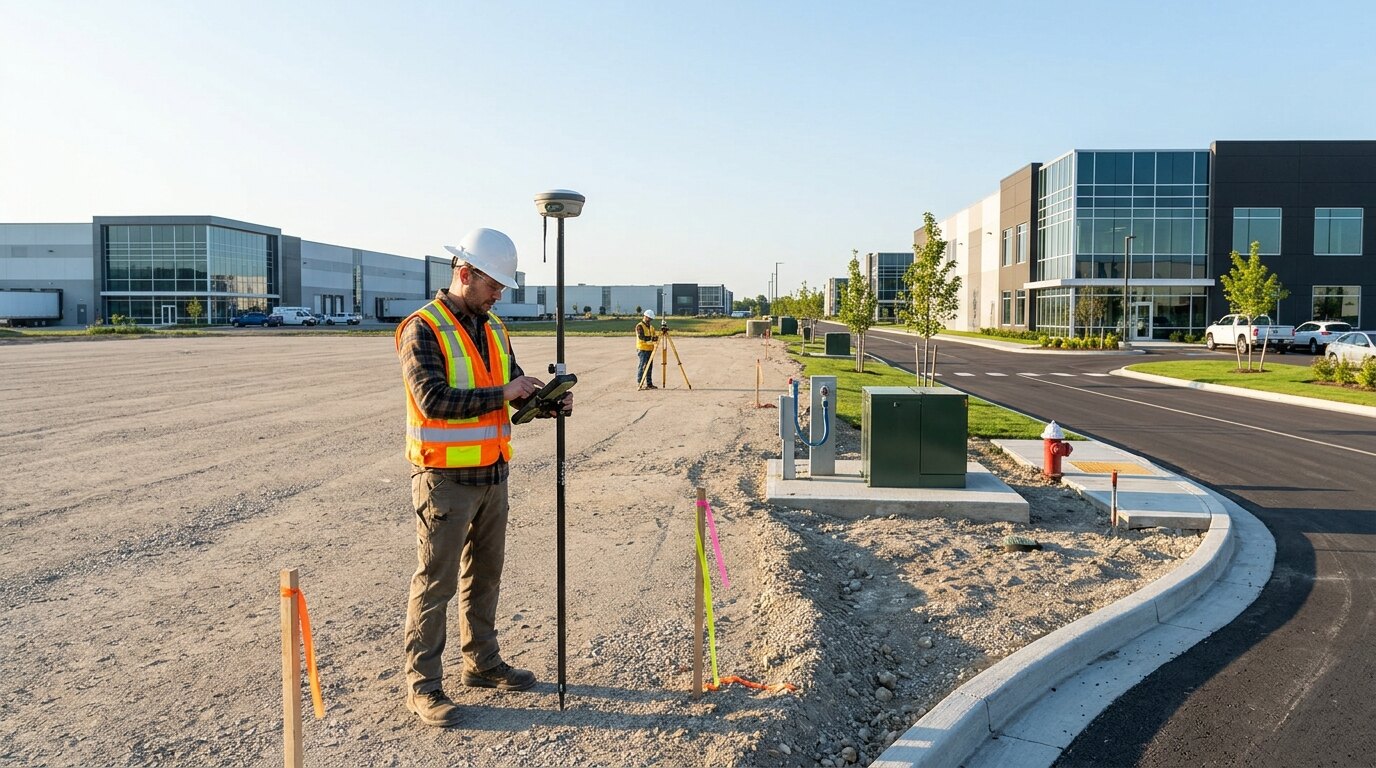
This checklist is written with an engineer's mindset: every item is a check you can document, with an owner and a piece of evidence. If an item has no evidence, it isn't verified, no matter how often the seller says "everything's in order."
It's organized into seven layers, from legal to operational. Each one notes what to review, which document backs it and why it matters in Querétaro specifically. At the end there's a list of red flags and a decision matrix.
One upfront caveat: this checklist doesn't replace the professional team. It's for knowing what to ask each specialist and for not signing with gaps.
Layer 1. Ownership
- Seller's title. Evidence: certified copy of the deed bearing the Querétaro Public Registry stamp and property folio.
- Encumbrances on the lot: mortgages, attachments, notations. Evidence: registry certificate issued within the last 30 days.
- Chain of title unbroken through at least the most recent transfers.
- Ejido origin. If the lot was communal ejido land, verify full ownership and its recording in both the National Agrarian Registry and the Public Registry.
- Who signs: the person in front of the notary must be able to dispose of the property. Evidence: current power of attorney, shareholder minutes or trustee instruction.
- Litigation and possession: no lawsuits, squatters or boundary disputes. Evidence: court search and site visit.
Why in Querétaro: much of the industrial growth toward El Marqués, Colón and the north of the capital happened on former ejido land. A poorly processed conversion to full ownership can stall a deal for years.
Layer 2. Area and boundaries
- Topographic survey, current, with coordinates and actual area.
- Cadastral boundary survey and a match between the deed, the cadastre and physical reality.
- Official alignment and street number issued by the municipality.
- Restrictions: federal or state rights of way, easements, high-voltage lines, pipelines, waterways or federal zones.
Why in Querétaro: many lots fronting Highway 57 or state roads carry rights of way that cut usable area. A 50,000 m² lot can have considerably less buildable surface.
Layer 3. Zoning and planning rules
- Zoning certificate or ruling from the relevant municipality: Querétaro, El Marqués, Corregidora, Colón, Pedro Escobedo, San Juan del Río or another.
- Applicable partial or municipal plan and compatibility with the specific use.
- Ratios for site coverage and floor area, height, setbacks and required parking.
- Foreseeable permits for the project: construction license, use feasibility, civil protection, traffic impact.
Why in Querétaro: each municipality has its own instrument and timelines. An analysis cited by Expansión estimates that a large-scale project such as a data center can require around 111 permits excluding the energy component, and that land-use changes and rights of way can add up to two years. Not every project is that complex, but the figure gives a sense of the margin to plan for.
Layer 4. Power
- Required load for the project, calculated by an electrical engineer.
- Feasibility from CFE or the relevant supplier, with interconnection point and required works.
- Nearest substation, available capacity and estimated connection time.
- Cost of connection works and who bears it.
- Alternatives: on-site generation, storage or qualified supply contracts.
Why in Querétaro: it's the most critical item in the state today. According to Cenace data cited in the business press, Querétaro's power demand reached 1,535 MW in 2025, against 723 MW of local installed generation. New capacity is being added, Corregidora got a major substation this year, but what's actually available still varies widely from zone to zone. Without documented feasibility, an industrial lot isn't ready.
Layer 5. Water and drainage
- Water source: municipal or state network, well with a current concession title, or transferred rights.
- Concession volume versus project demand.
- Feasibility from the State Water Commission or the local operator.
- Wastewater discharge and need for a treatment plant.
- Storm drainage and flood risk on the lot.
Why in Querétaro: eight of the state's eleven aquifers are overexploited, according to Conagua. Water rights are an asset in themselves and, in some cases, the factor that decides whether a project is viable. The state is pushing the El Batán system, designed to supply up to 1,500 liters per second to the metro area, but its main purpose is urban supply. For industry, the solution is still case by case.
Layer 6. Ground and environment
- Geotechnical study to define foundations and bearing capacity.
- Review of geological faults and subsidence in the area.
- Environmental history: previous uses, possible contaminants, fill.
- Environmental impact statement or preventive report, depending on the project.
- Archaeological remains: consult INAH where the area warrants it.
Why in Querétaro: heavy groundwater extraction in the valley has been linked to differential subsidence and ground cracking in some areas. It doesn't affect every lot, but a serious geotechnical study is essential before designing a building with a high-load floor.
Layer 7. Access and operations
- Vehicle access, legal and permanent, with trailer capacity.
- Merge permit onto a federal or state highway if the lot fronts one.
- Peak-hour travel times to the highway, the airport and residential areas.
- Staff transport: existing routes and ease for company buses.
- Security of the area and access roads.
If the lot is commercial rather than industrial
For lots intended for service centers, gas stations, business hotels or retail near industrial zones, the checklist shifts emphasis. Visibility, U-turns and traffic flow gain weight; extreme power load and trailer capacity lose some. But the ownership, zoning and water layers stay identical, and in many municipalities commercial use next to industrial zones comes with specific restrictions worth confirming in writing.
Who handles each check
| Layer | Typical owner |
|---|---|
| Ownership and litigation | Notary and real estate attorney |
| Area and boundaries | Surveyor and cadastral consultant |
| Zoning | Permitting consultant or architect |
| Power | Electrical engineer |
| Water | Hydraulic specialist or water-rights attorney |
| Ground and environment | Geotechnical engineer and environmental consultant |
| Access | Traffic engineer |
Red flags
- "The power feasibility comes through fast." Without a document, it's a promise.
- "The zoning change is already in process." Ask what stage and since when.
- "The well has plenty of water." Ask for the concession title and authorized volume.
- Deed area very different from physical area.
- A seller who won't allow soil studies before signing.
- A below-market price with no clear explanation.
Realistic timelines
With an organized seller and a coordinated team, the legal and area layers can be done in three or four weeks. Power and water take the longest: a feasibility response can take weeks or months depending on the area and the load requested. That's why those requests should start on day one of the review period, in parallel with everything else, not at the end.
A common mistake is leaving the soil study until after closing because "we'll need it anyway." If the study reveals a serious problem, there's no room left to negotiate. Doing it beforehand costs the same and is worth far more.
Decision matrix
| Result | What it means | What to do |
|---|---|---|
| Green | Complete, favorable evidence | Move to final negotiation |
| Yellow | Fixable issues with known cost or time | Make payment conditional or adjust the price |
| Red | Ownership, power or zoning problems with no clear path | Don't buy, or restructure the deal from scratch |
The matrix applies layer by layer, not to the lot as a whole. A lot can have five layers in green and one in red. That single layer is enough to stop the purchase if it touches ownership, power or zoning.
How to structure the purchase
For industrial land, it makes sense to sign a promissory agreement with a 60- to 90-day review period, an escrowed deposit and conditions precedent tied to the critical items: power feasibility, zoning and the soil study. If any isn't met, the buyer gets the deposit back.
The same checklist works in other Bajío and northern markets, with adjustments. In San Luis Potosí water has its own particularities; in Monterrey it has been at the center of the industrial conversation for years.
This content is for informational purposes only and does not constitute legal, tax, financial or investment advice. Figures come from public sources available as of November 2026. Before buying commercial property, land or investment property in Mexico, we recommend validating documentation, zoning, permits, restrictions, project feasibility and legal conditions with qualified professionals.
The images shown are for reference purposes only and may not represent reality.