
What Querétaro’s 40 Shopping Centers Reveal About Commercial Land Opportunities
When a market has enough shopping centers to become part of daily life, investors should look beyond the obvious headline. The real story is not only retail. It is traffic, routines, services, families, employment and land that can still be positioned around those patterns.
Querétaro has spent years showing up in conversations about industry, logistics and quality of life, but retail gives a different kind of signal. El Universal Querétaro reported, citing CBRE, that the state has around 40 shopping centers with surfaces larger than 10,000 square meters. For anyone evaluating commercial properties in Querétaro, that number matters because it points to organized consumption, mature corridors and a market where convenience has become part of the urban rhythm.
That does not mean every corner is automatically a good investment. It means the buyer has a better map to read. Shopping centers show where people already drive, walk, park, buy groceries, eat, work out, visit banks and resolve errands. A commercial lot near those habits may have a stronger thesis than a larger parcel located in a place where the story still depends on hope, renderings and a little bit of real estate jazz hands.
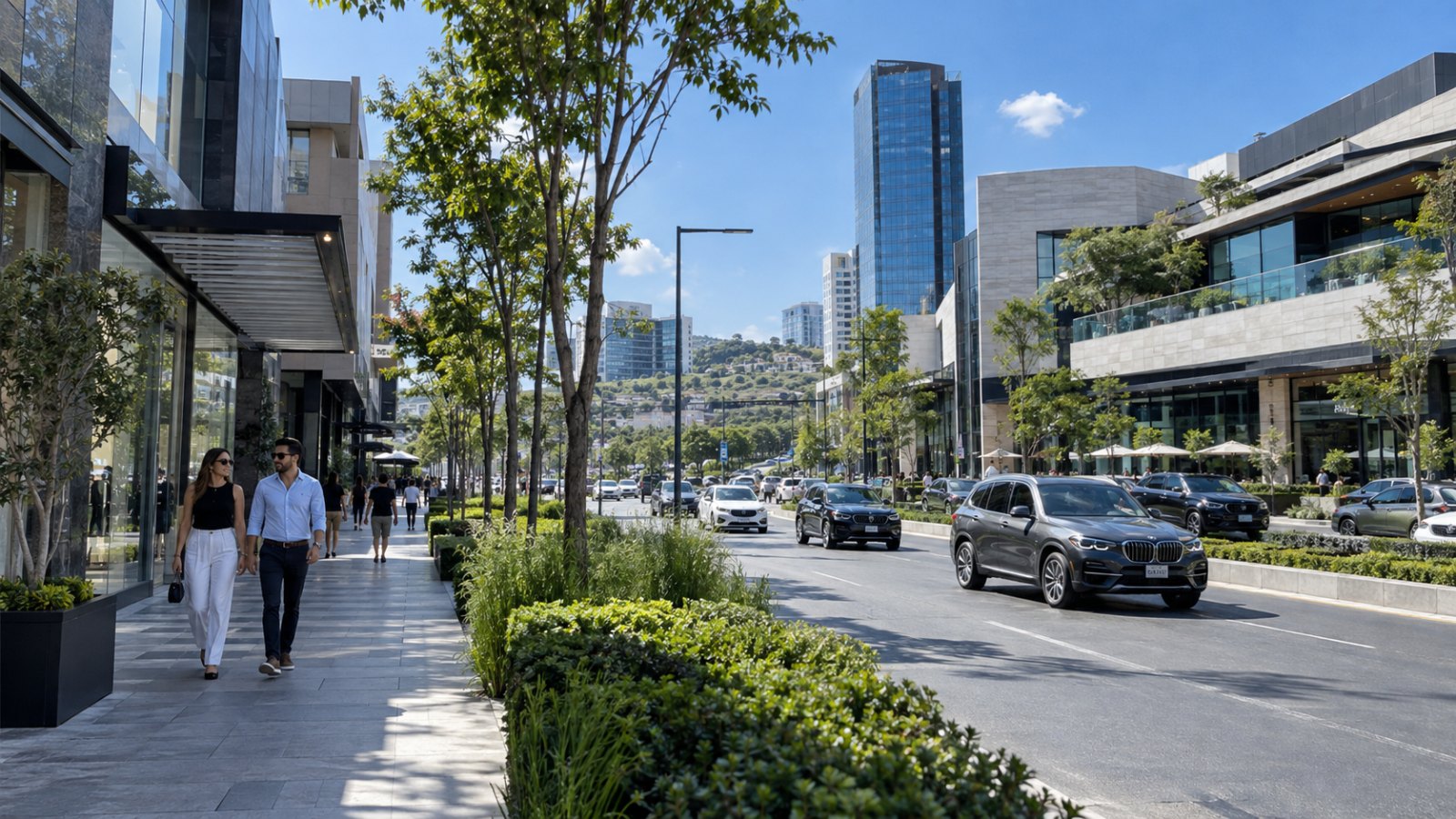
The useful clue is repetition
Retail assets become valuable when people return. A supermarket is not visited once. A pharmacy is not needed once. A coffee shop near offices, a gym near residential density, a bank close to a service corridor and a restaurant next to a daily route all depend on repetition. That is why the shopping-center inventory in Querétaro is useful for land buyers: it suggests that many areas of the state already have repeated consumer behavior, not only occasional visits.
For commercial land, repetition is more important than glamour. A lot can look ordinary in photos and still have a strong investment logic if it sits near a road people use every day, a residential community that lacks services, a school, a hospital, an industrial park or a business corridor. This is where land for sale in Querétaro should be reviewed as a business decision, not as a generic real estate purchase.
The first filter is simple: what problem could the location solve every week? If the answer is convenience, services, food, healthcare, banking, storage, office support or retail close to housing, the land may have a clearer path. If the answer is only “it is in a growing area,” the buyer still needs more homework.
Anchor stores still teach location better than slogans
The same report mentioned that the most common shopping-center format in Mexico is built around an anchor store. That detail sounds basic, but it is one of the most practical lessons for commercial buyers. An anchor does not only sell products. It organizes traffic. It gives people a reason to repeat a route. It makes a place easier to remember and easier to combine with other errands.
Commercial lots can borrow that logic. A buyer does not always need to build a large shopping center to benefit from a mature retail environment. Sometimes the better opportunity is a smaller service plaza, a restaurant site, a clinic, a convenience format, a bank branch, a showroom, a last-mile point or a mixed-use project that complements what is already happening nearby.
That is why a property such as a commercial lot facing Blvd. Bernardo Quintana should be analyzed through visibility, access, frontage, turning movements and surrounding activity. The value is not just that the address sounds good. The value is whether cars can see it, reach it, exit it and remember it. In commercial real estate, those small operational details are not small at all. They are where the rent is hiding.
Querétaro is not one single commercial story
One of the easiest mistakes is to speak about Querétaro as if every zone moved for the same reason. It does not. Juriquilla, Jurica, El Marqués, Centro Sur, the airport corridor and established urban avenues each respond to different demand drivers. Some locations are better for service retail. Others are better for industrial land. Others work as long-term land banking plays because growth is moving toward them, but the immediate operating case still needs to be proven.
This is why Selva Comercial should not present commercial land as a single product. It is better to present each opportunity as a thesis. A lot in a consolidated corridor may be about visibility and immediate service demand. A parcel in El Marqués may be about population growth, industrial expansion and a shortage of daily services. A property near the airport may be about logistics, scale and business connectivity.
The buyer’s question should not be “is Querétaro good?” That is too broad to be useful. The question should be “which part of Querétaro matches the use I want: income, operation, development, land banking, industrial expansion or services around housing?” Once that question is clear, the inventory becomes easier to filter and the conversation becomes less emotional.
Large shopping centers can create smaller openings
A city with many shopping centers does not need every investor to build another massive retail project. In fact, some of the most realistic opportunities can be smaller and more precise. Large retail anchors can create overflow demand for complementary services, specialty stores, restaurants, medical offices, business support, parking solutions and last-mile operations. Around established consumption nodes, investors can look for gaps rather than trying to duplicate the largest players.
This matters because commercial land is often sold with big words: potential, growth, future, location. All of them can be true and still not be enough. A serious buyer needs to translate them into practical checks: permitted use, water and power availability, road access, frontage, nearby competition, parking, municipal criteria, construction timing and likely tenant demand.
Through Selva Comercial, the conversation can move from “we have land” to “what use does this land support?” That difference is important. Land does not become valuable only because the city is growing. It becomes investable when the site has a believable use, a buyer or tenant profile, a route to approvals and a realistic exit strategy.
Retail and industry are closer than they look
Many investors separate retail and industrial too quickly. In Querétaro, they often feed each other. When industrial parks, warehouses and corporate operations expand, people also need restaurants, convenience stores, clinics, banks, hotels, apartments, schools, gas stations and maintenance services. Employment creates errands. Routes create stops. New communities create shortages that commercial properties can solve.
That is why industrial properties in Querétaro should be read together with retail and service demand. A warehouse corridor may not look like a shopping district on day one, but it can create the traffic and working population that later support commercial services. A residential corridor may not look industrial, but if it sits between employment areas and growing communities, it may become a strong service location.
The best investors do not chase categories. They chase relationships. Where do people live? Where do they work? How do they move between both? What do they need on that route? What is missing now? Those questions are much more useful than simply asking for the cheapest lot or the largest parcel.
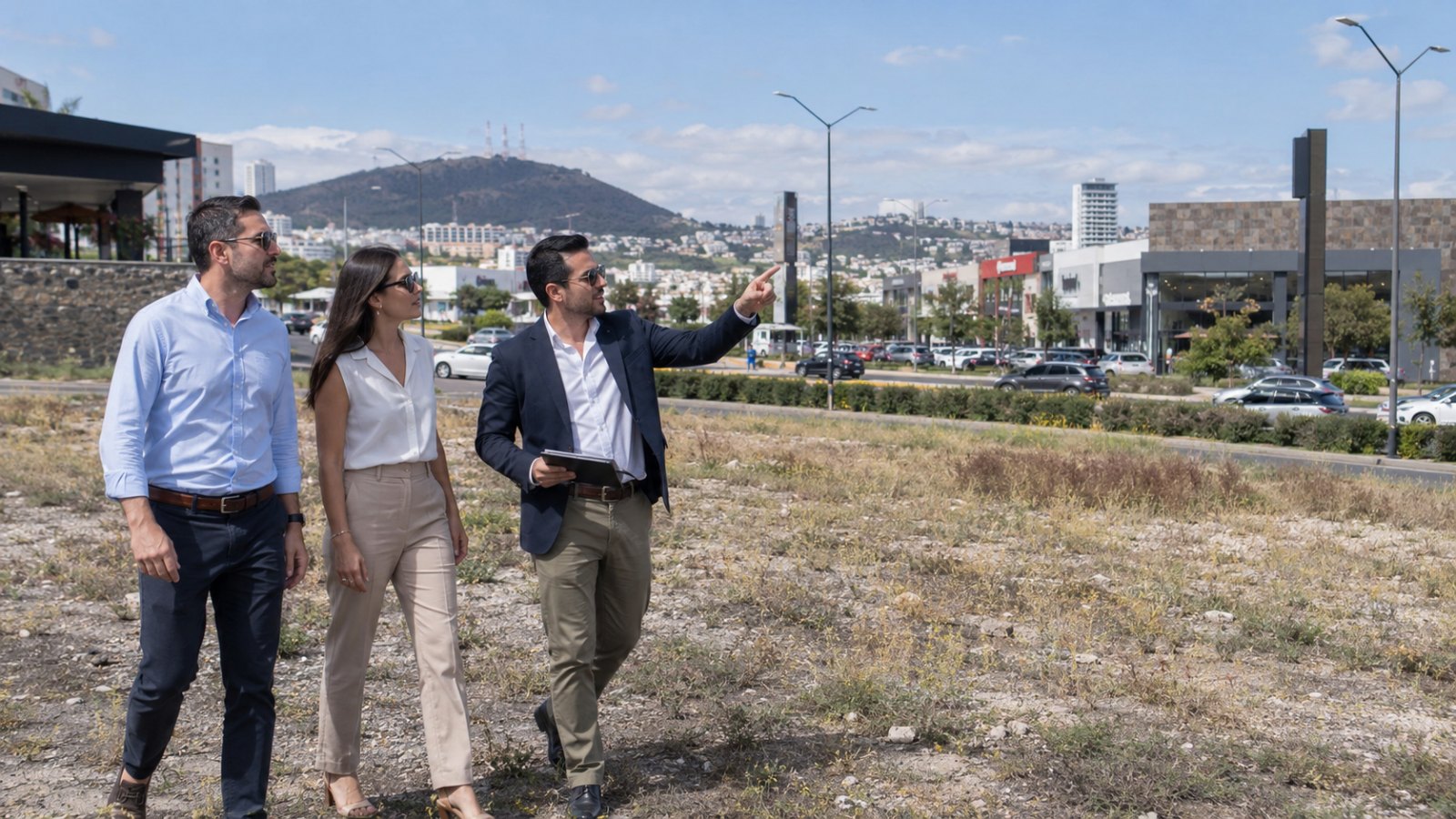
How to use the shopping-center signal before buying
The news about Querétaro’s shopping centers should not be treated as an automatic instruction to buy retail. It should be treated as a market signal. It suggests that the state has enough organized consumption to support many types of commercial activity, but each property still needs individual review.
A buyer who wants income should look at tenant demand, lease comparables and daily foot or vehicle traffic. A buyer who wants development should review zoning, density, utilities and timing. A buyer who wants long-term appreciation should compare future infrastructure, residential growth and nearby business activity. A buyer who plans to operate a business should prioritize access, visibility and customer profile over abstract appreciation.
In practical terms, this is where a guided review saves time. Selva Comercial can help compare corridors, uses and properties instead of letting the buyer fall in love with the first large number of square meters. Bigger is not always better. More connected, more visible and more usable usually wins.
A smart buyer listens to the pattern, not the noise
Querétaro does not need exaggerated promises. The market already has enough signals: shopping centers, industrial activity, residential expansion, business growth and infrastructure demand. The opportunity is to read those signals calmly and connect them to the right type of land or commercial property.
Before making an offer, a buyer should define the thesis. Is the goal rent? Development? Operation? Mixed use? A service plaza near housing? A commercial site that supports an industrial corridor? A long-term hold? The clearer the thesis, the easier it is to evaluate whether a specific asset fits.
The shopping centers are only one part of the map, but they say something important. Querétaro is not only growing on paper. It is building routines. And when a city builds routines, commercial land can become more than a parcel. It can become the place where those routines turn into business.
A useful retail market is not only downtown
Another important point is that Querétaro’s commercial energy is no longer limited to the traditional center of the city. Retail follows rooftops, office routines, school routes, industrial jobs and highways. That means investors should look for secondary corridors with discipline, not as leftovers. A corridor that is not yet famous may still have the daily demand that a practical commercial project needs.
This is especially relevant for land buyers who do not want to compete only for the most obvious sites. The mature retail market can create pressure in well-known zones, but it can also reveal where the next layer of services is missing. A growing residential area with limited food, health, banking or convenience options can become more interesting than a saturated avenue with high prices and little flexibility.
For Selva Comercial, that opens a better way to discuss inventory. Instead of presenting every lot as “excellent location,” the article, the advisor and the buyer should ask what the area is asking for. Some lots are better for service retail. Some are better for a compact mixed-use concept. Others should be held while nearby density catches up. The opportunity is not the city in general. The opportunity is the match between location, use and timing.
That extra layer of discipline matters because commercial land is rarely about one perfect variable; it is about several ordinary variables working together at the same time.
Selva Comercial
Explore commercial land and business properties in Querétaro
Compare locations, permitted uses, frontage, access and investment opportunities with a team focused on commercial real estate in Mexico.
The images shown are for reference purposes only and may not represent reality.