
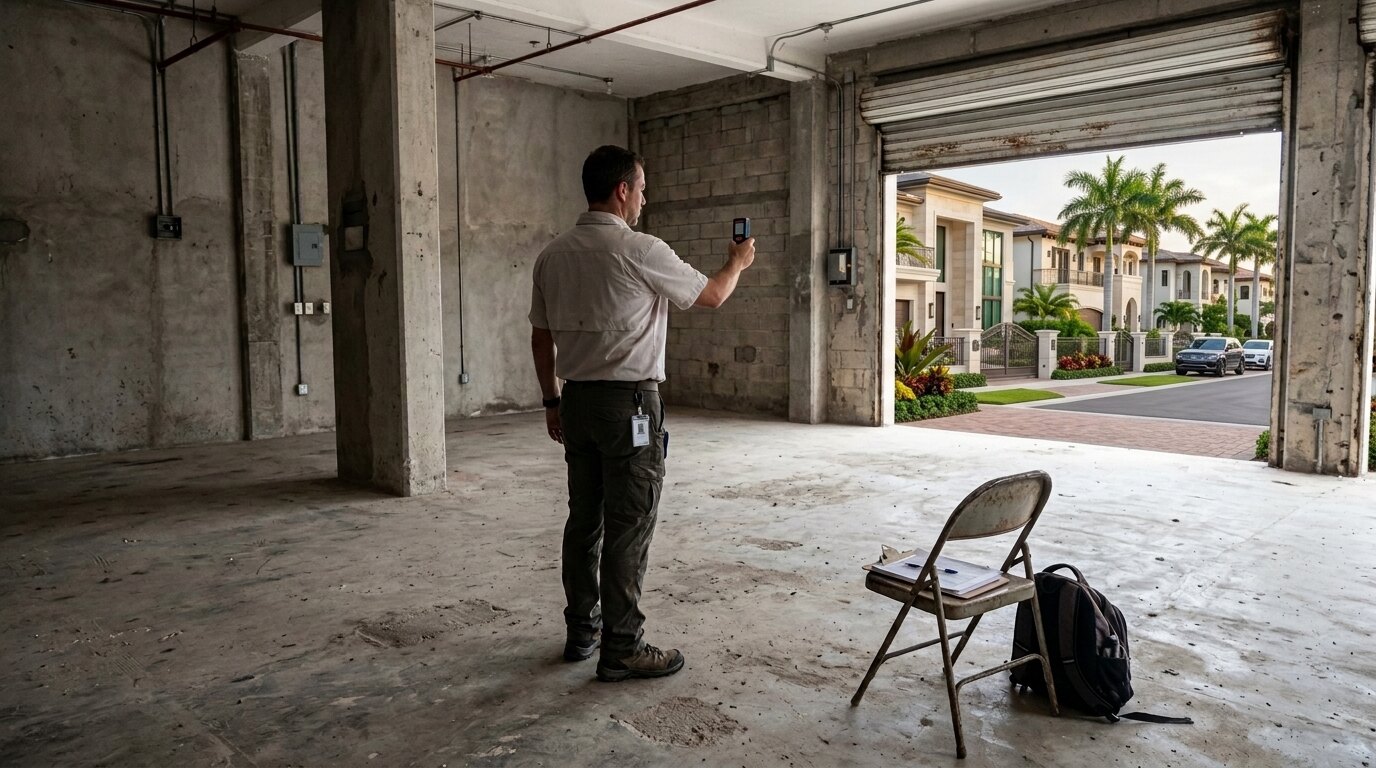
Nobody prices low on purpose. It's normal for a seller to aim high; the opposite would be strange. The trouble starts when the price is held up by nothing but enthusiasm, and the buyer pays it without noticing.
In Cancún this happens a lot for a simple reason: there's demand, there are out-of-town investors who don't know the city and there are plenty of success stories going around. The result is listings with optimistic numbers. Here are the lines we hear most in negotiations over retail units, offices, hotels and land, and what they usually hide.
"It'll rent easily for 60,000 a month"
Translation: it's not rented right now, or it's rented for less.
Rent that doesn't exist in a lease is an opinion. Ask for the current lease, the deposits on the bank statement and the history for the last two or three years. If the unit sat empty for six months last year, that's part of the price. If there's no lease, value it on the rent you can verify, not the rent somebody imagines.
"It yields 10%"
Translation: 10% before expenses.
Do the subtraction yourself. An example with made-up numbers, just to show the method:
- Rent: 45,000 pesos a month, or 540,000 a year.
- One empty month on average: −45,000.
- Center maintenance fees: −36,000.
- Property tax: −9,000.
- Insurance: −15,000.
- Repairs: −15,000.
You're left with 420,000 pesos net per year. If they're asking 7.5 million, your real yield is 5.6%, not 7.2% gross and not the brochure's 10%. If you expect 8% net for that risk, the price that works for you is close to 5.25 million. The seller may have reasons to ask more: a national chain tenant with ten years left on the lease is worth more than a small shop with a lease about to expire. But that conversation happens with numbers, not adjectives.
"The one next door sold for so much"
Translation: something sold, at another time, under other conditions.
Ask what exactly sold. Same size? Same corner? Leased or vacant? Six months ago or six years ago? Closing price or asking price? A corner unit on Bonampak is no benchmark for one mid-block on a side street. In commercial deals, the gap between what's asked and what's paid can be large.
"With the bridge, this will be worth double"
Translation: they're charging you today for the future.
Cancún has real projects that do change the map: the Nichupté Bridge is already open, the Kukulcán interchange is advancing and the southern bypass is under construction. That's not in question. What is in question is how much of that benefit is already in the price. If a lot in the south is priced as if the bypass were already running, you carry the delay risk and the seller keeps the upside. Pay for part of the potential. Not all of it.
"It's ideal for a hotel"
Translation: we don't know yet if that's allowed.
Ideal according to whom? Before talking price, ask for the zoning certificate and check what density, height and uses it allows. If the numbers only work with a permit that doesn't exist, you're paying for a bet. Zoning changes take time, cost money and sometimes simply don't happen.
"With good management it would make a fortune"
Translation: with current management, it doesn't make that much.
A classic with small hotels. Price should rest on what the business generates today: occupancy, average daily rate, revenue per available room. If the seller has no financial statements but a great vision, they're selling you a project. It might be a good opportunity, but the work and risk of turning that vision into numbers would be yours, and that has to show up in what you pay.
"I have another offer, decide this week"
Translation: sometimes true. Sometimes not.
Rushing rarely works in your favor. A serious seller understands that a commercial buyer needs to review documents, visit the property and validate numbers. If the pressure shows up right when you ask for the lease or the zoning certificate, pay attention to that coincidence.
"The tenant is great, never late once"
Translation: probably true. Ask when their lease ends.
A good tenant with six months left isn't the same as one with five years ahead. If they don't renew, you're left with an empty unit bought at a leased-unit price. Also ask whether the current rent is below market: sometimes a tenant is punctual precisely because they pay little, and they might leave at renewal.
"It's a high-appreciation area"
Translation: I don't have data, but it sounds good.
Appreciation of what, since when, compared with what? If someone uses that phrase, ask for the transactions behind it. If they don't have them, treat it for what it is: decoration.
"It just needs a little touch-up"
Translation: it needs more than that.
Paint is a touch-up. Waterproofing, replacing the electrical panel, redoing the grease trap or swapping three AC units are not. Bring someone who knows building systems to the visit. It costs little and can save you a lot.
"The appraisal came in above my asking price"
Translation: the appraisal says one thing; the market may say another.
Appraisals serve different purposes and use different methods, and many don't account for rental income. For a commercial asset, an appraisal is one more data point, not the final verdict. What rules is what the property earns and what's recently been paid for similar ones.
"It already has an operating license"
Translation: the previous tenant had one.
Operating and liquor licenses usually belong to whoever runs the business, not to the property. A restaurant having operated there doesn't guarantee the next one gets the same permit, especially if regulations changed or there were irregularities nobody checked. Confirm with the municipality what can be obtained today, for the use you want.
"I'm selling because I want to invest in something else"
Translation: maybe. Or maybe there's more to it.
Not an accusation; plenty of people sell for perfectly normal reasons. But it's worth asking casually and listening carefully. A tenant who gave notice, a center whose management is in conflict, a project that will affect access: these are things the seller knows and you're entitled to know before making an offer.
What nobody says but still costs money
Some overpricing doesn't come in phrases, it comes in silences. Wiring that can't handle a restaurant. A mezzanine that never had a permit. Water bills from when the unit was empty. A federal-zone concession that isn't in the seller's name. A roof that leaks every September. None of it is on the listing; all of it ends up on your bill.
A useful trick: list all these pending items and put an approximate cost on each. That list, presented calmly, is the best negotiating argument there is.
Liquidity matters too. A highly custom property, like a bar with a fixed stage or a hotel with an odd layout, has fewer possible buyers the day you want to sell. That should weigh on what you pay today.
"There's nothing else like it in the area"
Translation: I didn't look.
It may be true. Some corners are one of a kind. But most of the time there are two or three comparable options a few blocks away, or in a similar area across town. Before accepting that something is unique, try to find its replacement. If you find it cheaper, you have an argument. If you don't, now you know why it costs what it costs.
The ten-minute test
Before you offer, answer these honestly:
- Do I have the real lease or just the promise?
- Did I run my own net income numbers?
- Are my comparables the same type, area and timeframe?
- Does the price still work if the public project is two years late?
- Does the zoning allow what the price assumes?
- Do I know what it costs to fix what's wrong?
- Did I visit in low season?
If you answered "no" to three or more, you're not ready to offer yet. That's fine. There are more units. And sometimes the same business idea works better, and cheaper, in another area or in a nearby destination like Puerto Morelos.
A high price isn't necessarily a bad price. Some locations are irreplaceable and worth what they cost. The problem is a price nobody can explain with data.
This content is for informational purposes only and does not constitute legal, tax, financial or investment advice. Before buying commercial property, land or investment property in Mexico, we recommend validating documentation, zoning, permits, restrictions, project feasibility and legal conditions with qualified professionals.
The images shown are for reference purposes only and may not represent reality.